Ame
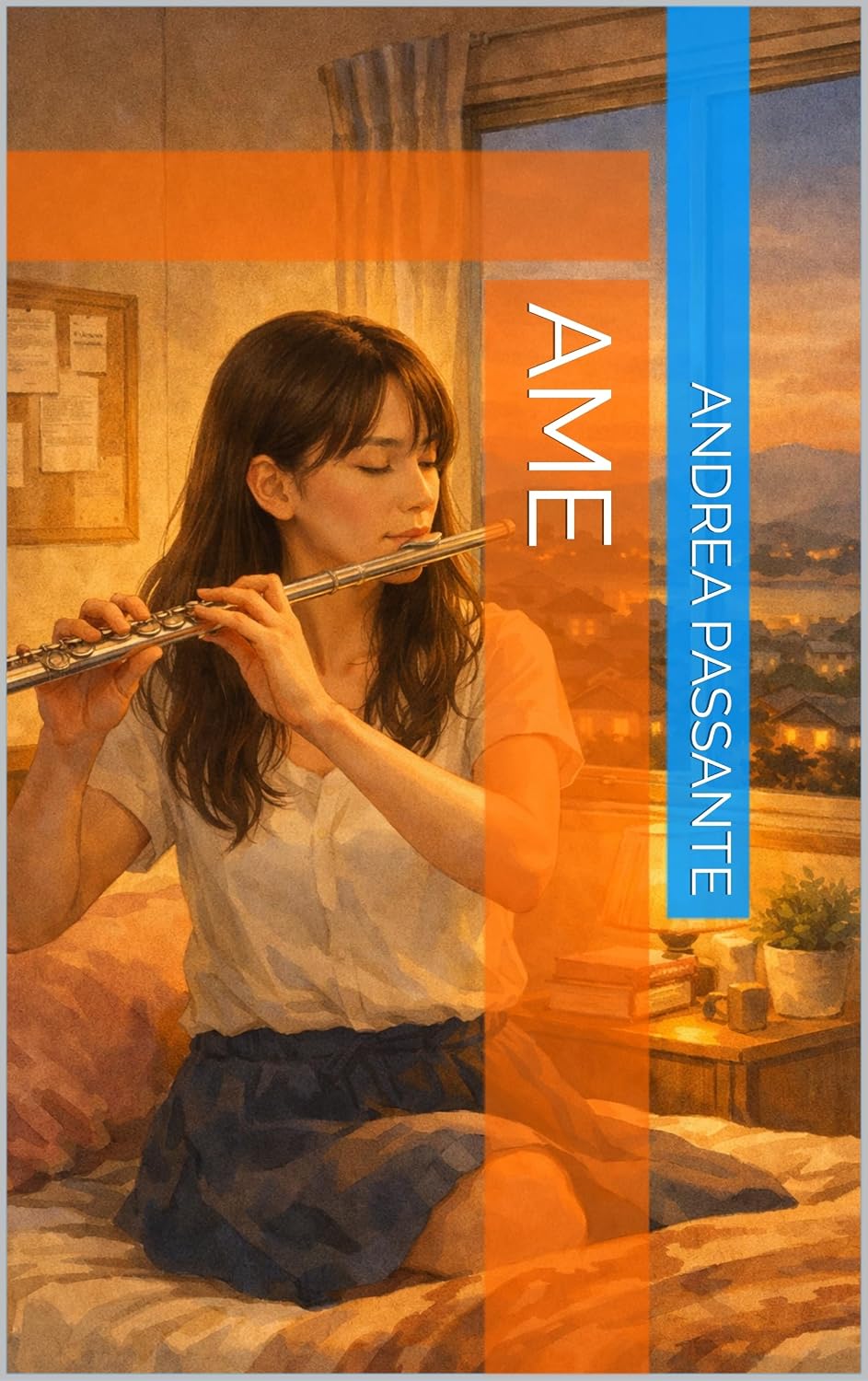
Ame Nishimura renamed herself Rain as a teenager.
Not sweet — rain. It's a small distinction, easy to miss if you don't read Japanese, but it mattered enormously to her at the time, and it still does. The kanji she chose for herself said something true about who she was that the one her parents had chosen for her, all those years earlier, never quite managed to.
At twenty, she left Matsuyama for Rome, where she spent three years studying flute at the Accademia Nazionale di Santa Cecilia — one of the world's great music conservatories, the kind of place that doesn't let just anyone in the door. She worked hard, in the unglamorous, repetitive way that mastering an instrument actually requires. She played well, well enough that people noticed. And around the practising, she built something that started to look like an actual life: a flat shared with two flatmates who became something closer to family, a corner bar that turned, almost without her noticing, into hers, and a professor who listened to her — really listened, the way remarkably few people ever bother to.
But Rome, it turned out, had walls Ame hadn't anticipated. Not artistic ones — those, at least, she knew how to work at and eventually get past. Administrative ones. The kind that have no face to argue with and no malice to appeal to, that simply will not move no matter how well you play or how hard you work, and that don't care in the slightest how much of yourself you've already put into being there.
Then a phone call arrives from home, carrying news about her father, and everything Ame has built in Rome is suddenly weighed against everything she left behind in Matsuyama. Ame is a novel about the cost of the things we chase and the pull of the things we leave — and about the moment, when it finally comes, of having to decide
Reading level
| Dimension | Assessment |
|---|---|
| Sentence structure | B2 |
| Core vocabulary | B1+/B2 |
| Idiom & colloquial English | B2 |
| Figurative & abstract language | B2/C1 |
| Cultural references | B2 |
| Irony & humour | B2 |
| Subtext & inference | B2/C1 |
| Supported classroom use | B2 |
| Independent reading | C1 |
Why two levels? In the classroom, teacher guidance, discussion, glossaries and chapter materials provide support for more demanding vocabulary, cultural context, figurative language and implied meaning. Independent readers need to interpret the novel's emotional subtext and abstract themes without scaffolding, so a higher reading level is recommended.