
Being Excused
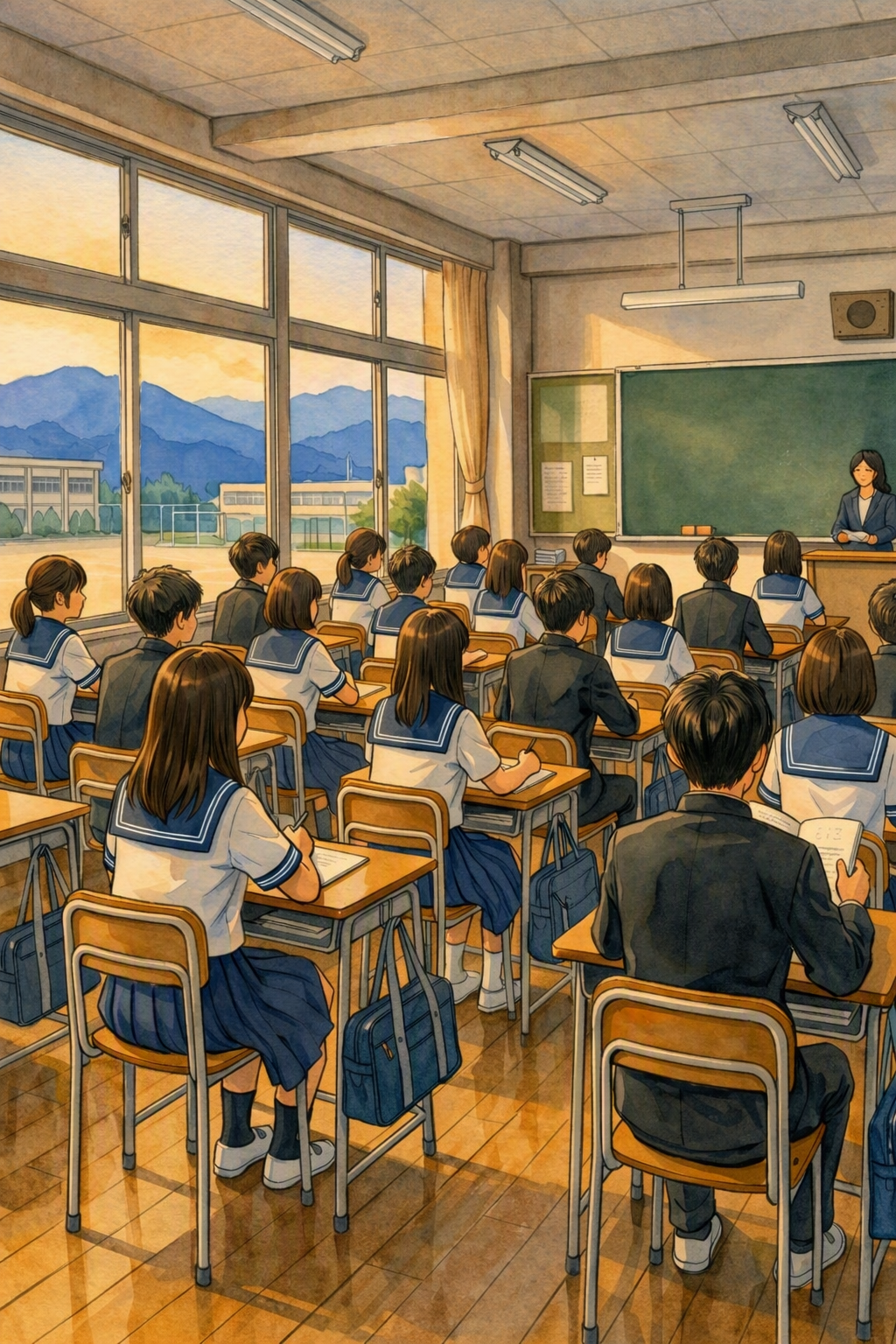
Everyone was kind to him. That was the problem.
Massimo Vannini has wanted this exact year for as long as he can remember. When his father's engineering work takes the family to Osaka for twelve months, Massimo insists on the one thing that matters to him: a real Japanese high school, not the international school down the road with its safety net of other foreigners. He's studied the language on his own since he was eleven. He knows what he's walking into. He's ready.
He isn't ready.
Nobody at his new school is ever unkind to him. That's the strange part. He is greeted every morning, excused from the cleaning rota, applauded for sentences a child could manage, gently steered away from anything that might embarrass him. He is, in short, treated like exactly what he told them he was on his first day: a guest, here for one year, not worth the trouble of really knowing. The kindness never stops. Neither does the loneliness underneath it.
It takes his father's cultural aide, Claudio Mazzanti, an Italian historian who has made his own home in Kyoto, to finally give Massimo the words for what's happening to him, and the harder truth that follows: understanding the problem doesn't make it go away. Belonging isn't given. It has to be asked for, again and again, in ordinary places — a cleaning rota, a burnt saucepan, a corridor nobody else wanted to scrub — until the asking stops being strange.
Being Excused follows one school year through the friendships Massimo has to fight to keep — a classmate who starts as a duty and ends as a real friend, a girl who reads him more clearly than he reads himself, a tutor who never once makes him feel like a burden precisely because she never says so — and the ache of finally, properly belonging somewhere just as the year runs out. When he flies home to Florence, the city hasn't changed at all. He has. This is a story about kindness that isolates, obligation that connects, and the strange, specific grief of missing somewhere you once couldn't wait to leave.
Reading level
| Dimension | Assessment |
|---|---|
| Sentence structure | B1+/B2 |
| Core vocabulary | B1/B1+ |
| Idiom & colloquial English | B2 |
| Figurative & abstract language | B2 |
| Cultural references | B2 |
| Irony & humour | B2 |
| Subtext & inference | B2 |
| Supported classroom use | B1 |
| Independent reading | B2 |
Why two levels? In the classroom, teacher guidance, discussion, glossaries and chapter materials provide support for idiomatic English, Japanese school culture, figurative language and the novel's themes of inclusion and belonging. Independent readers need to recognise social cues, understated humour and the distinction between kindness and genuine inclusion without scaffolding, so a higher reading level is recommended.