
Casa Felice
You don't need to fully understand your neighbours to live well with them.
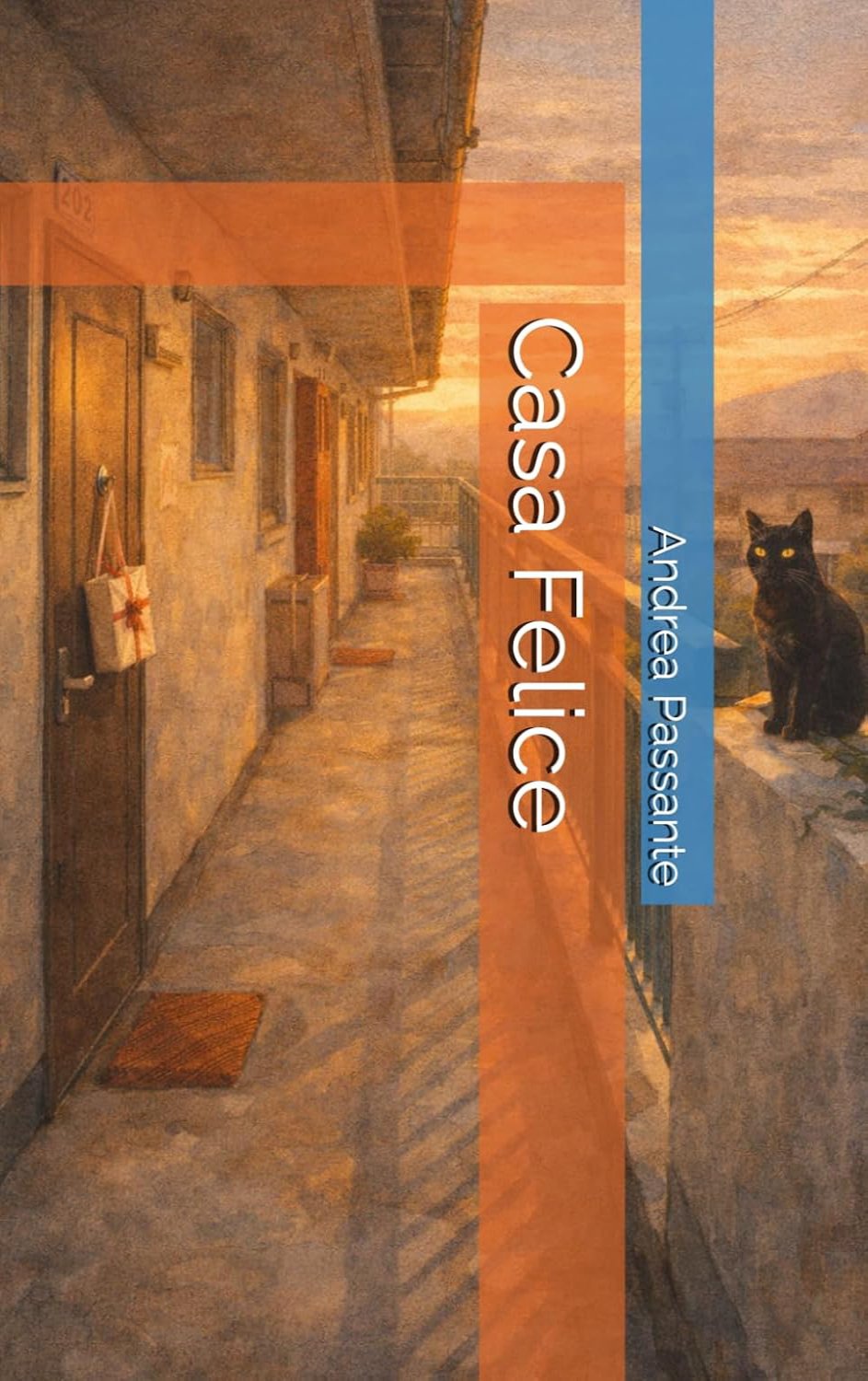
When Claudio Mazzanti arrives in Kyoto to begin his PhD in Japanese history, the apartment he ends up in is the one at the bottom of the housing list — the one nobody else particularly wanted. It has an Italian name, which feels like either a coincidence or a small joke at his expense: Casa Felice. Happy House. The rent is low enough that he doesn't ask too many questions. The building sits out on the eastern outskirts, a little further from campus than he'd have liked. On paper, there is nothing wrong with it at all.
His neighbours, it turns out, are a little strange — nothing dramatic, nothing he could point to and name, just a low hum of things that don't quite add up if he lets himself look too closely. Shimo, in 201, leaves things on the hook outside his door: always cold, always impossibly fresh, though Claudio never sees them arrive. Bunta, from 205, has a habit of appearing in the corridor with food, opinions, and a timetable of his own — gone again before Claudio can even find the words to thank him properly. The man in 103 has to turn sideways to fit through his own doorframe. And the cat that follows Claudio home from the café one afternoon looks, disconcertingly, exactly like the cat he'd already noticed on the stairwell the week before. Probably a coincidence. He has a PhD; he knows how to tell himself that.
Casa Felice follows one Italian student's year in Kyoto — research trips out to Nara, the friendships that take shape slowly around a shared department office, and a building that becomes home without Claudio ever quite consciously deciding it should. It's a novel about belonging somewhere you were never really meant to be, narrated by someone with more than enough academic training to understand precisely what's happening around him, and who keeps, quite deliberately, finding reasons not to.
Reading level
| Dimension | Assessment |
|---|---|
| Sentence structure | B2/C1 |
| Core vocabulary | B2 |
| Idiom & colloquial English | B2 |
| Figurative & abstract language | B2/C1 |
| Cultural references | B2/C1 |
| Irony & humour | B2 |
| Subtext & inference | C1 |
| Supported classroom use | B2 |
| Independent reading | C1 |
Why two levels? In the classroom, teacher guidance, discussion, glossaries and chapter materials provide support for more demanding vocabulary, historical and cultural references, figurative language and implied meaning. Independent readers need to recognise recurring clues, ambiguity and supernatural subtext without scaffolding, so a higher reading level is recommended.