
Missing Home
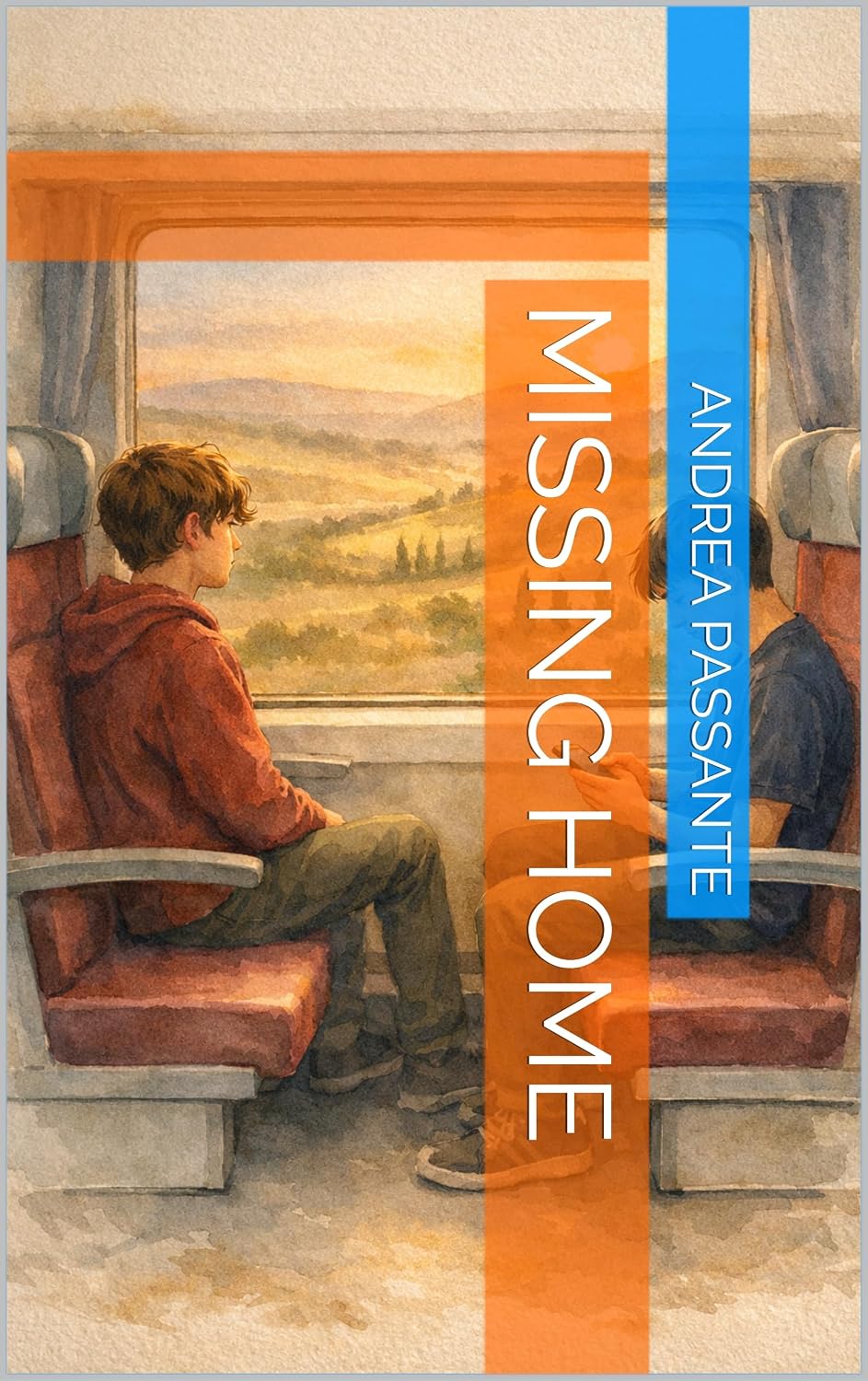
Alessandro Masakazu Bevilacqua Kobayashi. The name alone takes some explaining.
Half Italian, half Japanese, Alessandro has spent his whole life in Wakayama — the only home he's ever really known — until now. At fifteen, a plan his parents made long before he was old enough to have an opinion about it finally comes due: high school in Italy, in the small Tuscan town his family left when he was four and he was too young to remember leaving.
He arrives more prepared than most people in his position would be. He knows the language. He knows the route to school before he's walked it once. He's absorbed more about the Risorgimento in the past month than most of his new classmates ever will. What he doesn't know — what nothing could have prepared him for — is harder to study for. How a group of people quietly becomes yours, without anyone ever sitting down and deciding it should. How you go on carrying a place inside you long after you've left it. What "home" is even supposed to mean, when you've spent your whole life with two of them pulling in different directions.
Missing Home follows Alessandro through a full school year, told less through grand turning points than through the small accumulations that actually make up a life abroad: a friendship that forms on a train platform before either of them quite notices it happening, a conversation that only becomes possible because it happens on the way somewhere rather than face-to-face at a destination, a takeaway bench that becomes, without ceremony, somewhere he belongs. Slowly, almost without his noticing, the novel makes its quiet argument — that belonging isn't a place you arrive at all at once. It's something you accumulate, in pieces too small to count until, one day, you look back and realise how much you've gathered.
Reading level
| Dimension | Assessment |
|---|---|
| Sentence structure | A2+/B1 |
| Core vocabulary | A2+/B1 |
| Idiom & colloquial English | B1 |
| Figurative & abstract language | B1/B1+ |
| Cultural references | B1/B2 |
| Irony & humour | B1 |
| Subtext & inference | B1/B2 |
| Supported classroom use | A2+ |
| Independent reading | B1 |
Why two levels? In the classroom, teacher guidance, discussion, glossaries and chapter materials provide support for unfamiliar vocabulary, cultural references, figurative language and implied meaning. Independent readers need to handle those elements with less scaffolding, so a higher reading level is recommended.